Mandalas for Decorative Round Ornaments: A Strategic Asset for Design and Branding
In the landscape of visual communication, Mandalas for Decorative Round Ornaments represent more than mere aesthetic embellishments; they are sophisticated tools for structuring attention and conveying complex emotional narratives. For entrepreneurs, marketers, and creative professionals aged 20 to 50, understanding the strategic application of these vintage decorative elements is essential for elevating brand positioning and customer engagement. When integrated thoughtfully into a design system, a vector illustration featuring an oriental pattern or a beautiful swirl does not just fill space—it anchors a message, guiding the viewer's eye toward specific calls to action or core values.
The utility of this asset extends beyond simple decoration. Whether you are producing a coloring book for mindfulness, designing wedding invitations that evoke peace, or curating boutique packaging, the inclusion of a transparent PNG flower or a scalable SVG file offers distinct operational advantages. These elements serve as a visual language that transcends cultural barriers, leveraging the universal appeal of symmetry and balance to create a sense of harmony in chaotic market environments.
Defining the Strategic Value of Round Ornamental Assets
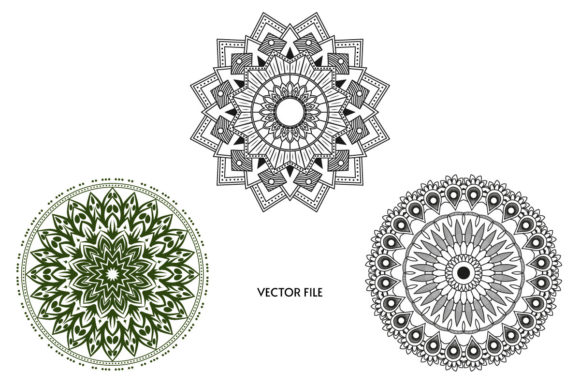
Mandalas for Decorative Round Ornaments function as focal points that command attention without overwhelming the surrounding content. Unlike generic clip art, a high-quality vector illustration derived from vintage decorative elements carries a weight of tradition and intentionality. The "Oriental pattern" mentioned in the asset description suggests a lineage of intricate craftsmanship, which can be leveraged by brands wishing to communicate heritage, quality, or exclusivity.
For decision-makers in small business and publishing, the versatility of receiving the file in multiple formats—AI, SVG, and PNG—is a critical operational benefit. The AI file allows for deep customization by in-house designers, ensuring the ornament aligns perfectly with specific color palettes. The SVG format guarantees crisp rendering across all digital devices, from mobile screens to large desktop monitors, while the transparent PNG provides immediate usability for web overlays and social media graphics where background removal is necessary.
This multi-format delivery supports a flexible workflow. A marketer might use the SVG version for responsive email headers, while a product manager could utilize the PNG for mockups on physical packaging. This adaptability reduces the need for external vendor dependencies, allowing internal teams to iterate rapidly on branding materials while maintaining a consistent visual identity.
Integrating Mandalas into Brand Positioning and Customer Experience
The decision to incorporate Mandalas for Decorative Round Ornaments should always stem from a clear brand strategy rather than a desire for trend-following. In the wellness industry, for instance, the mantra of "peace" associated with these designs is not merely a keyword but a value proposition. When used on a yoga studio's website or in a meditation app interface, the swirling patterns and symmetrical beauty signal a departure from the noise of modern life, inviting the user into a state of calm.
Similarly, for the wedding industry, these elements offer a tangible way to communicate elegance and timelessness. A vintage decorative element placed on a save-the-date card or a wedding program adds a layer of sophistication that resonates with couples seeking a personalized, artisanal feel. The round shape itself is symbolic of unity and eternity, making it a powerful subconscious cue for events centered around commitment and community.
However, the application must be precise. Overusing ornate patterns can lead to visual clutter, diluting the primary message. The key lies in the balance between the ornament and the content it frames. If the goal is to highlight a new product launch, the mandala should act as a subtle frame, drawing the eye inward rather than competing with the product image. This approach ensures that the design serves the business objective, enhancing readability and retention rather than distracting from it.
Practical Applications Across Creative Industries
The scope of Mandalas for Decorative Round Ornaments is vast, touching upon various sectors that rely on strong visual storytelling. Consider the following practical scenarios where these assets drive results:
- Coloring Books and Mindfulness Tools: For creators in the educational or hobbyist space, the intricate details of an oriental pattern provide the perfect challenge for adult coloring books. The complexity of the swirl invites focus, promoting mental clarity and stress relief. By offering a "beautiful, mantra" themed collection, publishers can tap into the growing market for self-care products.
- E-Commerce and Packaging: Small business owners can use the transparent PNG of the flower or pattern to create branded seals for their packaging. This small touch transforms a standard shipping box into a premium unboxing experience, fostering customer loyalty and encouraging social sharing.
- Digital Marketing and Social Media: Bloggers and influencers can utilize the SVG versions to create custom icons or section dividers. The round shape works exceptionally well as a profile picture overlay or a thumbnail accent, creating a cohesive look across different platforms.
- Event Planning and Hospitality: Hotels and event planners can integrate these vintage elements into signage, menus, and room decor. The association with "boutique" aesthetics helps establish a unique atmosphere that distinguishes a venue from generic competitors.
In each of these cases, the asset is not being used randomly. It is selected because its inherent qualities—symmetry, history, and complexity—align with the desired outcome of the project.
Risks of Unintentional Usage and Mitigation Strategies
While the potential benefits are significant, relying on Mandalas for Decorative Round Ornaments without a clear context carries risks. The primary danger is aesthetic dissonance. If a brand with a minimalist, tech-forward identity attempts to force a vintage, ornate mandala onto its platform, the result may feel incongruous and confusing to the audience. This misalignment can erode trust and damage brand equity.
Another risk involves the dilution of meaning. When every design element is treated as equally important, nothing stands out. Using a heavy, detailed oriental pattern behind text that requires quick scanning can hinder accessibility and user experience. In such instances, the ornament becomes an obstacle rather than an aid.
To mitigate these risks, practitioners must adhere to a strict set of guidelines before implementation. First, conduct a brand audit to ensure the "vintage" and "peaceful" attributes match your current market positioning. Second, test the visual hierarchy. Does the ornament support the content, or does it compete? Third, consider the technical constraints. Ensure that the resolution of the PNG is sufficient for print, and that the SVG code is clean enough to load quickly on web pages.
Planning for Long-Term Visual Consistency
Successful integration requires a long-term perspective. Rather than treating Mandalas for Decorative Round Ornaments as a one-off solution for a single campaign, view them as part of a broader visual library. By saving the AI and SVG files in a centralized asset management system, teams can ensure consistency across all future projects. This approach reduces the likelihood of accidental stylistic drift and speeds up the production timeline.
Furthermore, educators and freelancers can leverage these assets to teach principles of design. The structure of a mandala offers a concrete example of radial balance, symmetry, and repetition. By analyzing how the "swirl" and "flower" elements interact, students can learn fundamental concepts of composition that apply far beyond the specific use of this file.
Ultimately, the value of this asset lies in its ability to bridge the gap between functionality and emotion. When used with intention, a decorative round ornament transforms a static page into a dynamic experience. It invites the viewer to pause, reflect, and engage. For the professional looking to achieve better results, this shift from passive viewing to active engagement is the ultimate metric of success.
By approaching Mandalas for Decorative Round Ornaments with the same rigor applied to data analysis or financial planning, creators can unlock a level of visual communication that is both aesthetically pleasing and strategically sound. The choice to use these elements should always be driven by the question: "Does this help us achieve our goal?" If the answer is yes, then the vintage pattern, the oriental motif, or the peaceful swirl is not just a decoration—it is a strategic advantage.