Mandala Circle Decorative: Integrating Symmetry into Your Creative and Business Workflows
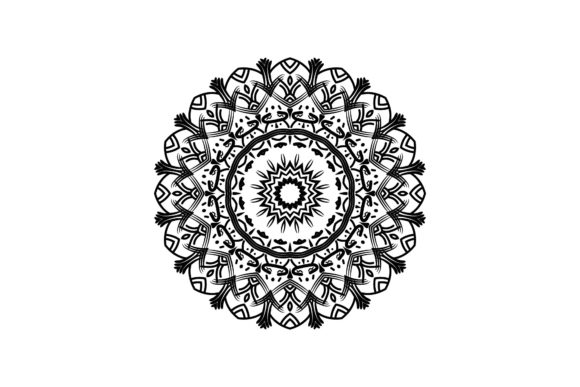
In the realm of digital design, few elements offer as much versatility and immediate visual impact as the Mandala Circle Decorative. For professionals, creators, and entrepreneurs who demand precision in their output, this specific design asset serves as more than just a decorative element. It acts as a structural anchor that can elevate branding materials, educational content, and personal projects alike. When integrated correctly into a workflow, it bridges the gap between aesthetic appeal and functional organization.
The core value of incorporating Mandala designs lies in their inherent symmetry and balance. This geometric perfection resonates with human psychology, creating an immediate sense of order and calm. Whether you are a marketer designing a campaign landing page, an educator preparing a complex slide deck, or a small business owner finalizing a product label, the presence of a well-crafted mandala can guide the viewer's eye and reinforce the central message of your work. Understanding where this asset fits within your broader process is the first step toward maximizing its utility.
Understanding the Asset: From Concept to File Delivery
To effectively implement the Mandala Circle Decorative in your projects, one must first appreciate the technical specifications provided. The package includes five distinct digital files, each optimized for different stages of the production pipeline. All assets are rendered on a 1920px by 1280px canvas, a resolution that ensures high fidelity across desktop displays, large-format prints, and standard web interfaces.
The inclusion of multiple formats—AI, EPS, SVG, JPG, and PNG—is not merely a convenience; it is a strategic necessity for modern workflows. Each file type serves a specific purpose depending on the software environment and the intended medium of use. By receiving these files together, you eliminate the friction of converting assets later in the process, allowing for a smoother transition from planning to execution.
- AI (Adobe Illustrator) File: This is the native vector format for Adobe users. It is essential when you need to access individual layers, adjust specific paths, or modify color palettes without losing quality. If your workflow involves deep customization, this is your primary working file.
- EPS (Encapsulated PostScript) File: Ideal for compatibility with legacy systems or professional printing presses. This format ensures that the intricate details of the mandala remain crisp when sent to commercial printers who may not have access to the latest version of Adobe Illustrator.
- SVG (Scalable Vector Graphics) File: A critical asset for web developers and UI designers. Because SVGs are code-based, they scale infinitely without pixelation, making them perfect for responsive websites, interactive applications, and high-DPI mobile screens.
- JPG File: The universal standard for raster images. Use this when you need to share previews quickly, embed images in email newsletters, or upload to platforms that do not support transparent backgrounds or vector data.
- PNG File: The go-to choice for web graphics requiring transparency. If you plan to overlay the Mandala Circle Decorative onto photos, colored backgrounds, or video footage, the PNG format preserves the clean edges necessary for seamless integration.
Strategic Placement in Professional Workflows
The application of the Mandala Circle Decorative extends far beyond simple decoration. In a professional context, design elements should always serve a functional purpose, guiding user behavior or reinforcing brand identity. Here is how this asset interacts with various stages of project lifecycles.
Pre-Production and Planning
Before a single line of code is written or a brochure is printed, the planning phase sets the tone for the entire project. Designers often struggle with establishing a visual hierarchy. The symmetrical nature of the mandala provides a natural focal point. During the mood board or wireframing stage, placing a low-resolution version of the mandala in the center of a layout can help stakeholders visualize the balance of the final composition. It acts as a visual placeholder that communicates "structure" and "completeness" before the actual content is finalized.
For educators and trainers, this asset is invaluable during the curriculum design phase. A mandala used as a header or section divider can signal to students that a new module is beginning. It creates a psychological break, helping learners reset their focus before diving into complex material. The 1920x1280 resolution ensures that these headers look sharp on both tablets and desktop monitors used in online learning environments.
During Execution and Production
Once the project moves into the active creation phase, the availability of editable vectors becomes paramount. If you are using the AI File, you can extract specific segments of the mandala to create unique patterns for backgrounds. This allows for consistency across a suite of marketing materials. For instance, a freelancer might use the full mandala for a website hero image while using a cropped, tiled version for social media story backgrounds.
For marketers launching a product, the Mandala Circle Decorative can be used to frame testimonials or feature highlights. The circular shape naturally draws the eye inward, making it an excellent tool for highlighting call-to-action buttons or key value propositions. By integrating the design early in the production cycle, teams ensure that the aesthetic remains consistent across all touchpoints, from email signatures to physical packaging.
Post-Launch and Maintenance
After a project goes live, maintenance often requires quick adjustments. Perhaps a client requests a color change to match a new brand guideline, or a web developer needs to optimize an image for faster loading times. Having the original EPS and SVG files ensures that these updates can be made instantly without degrading image quality. Unlike working with a static JPEG where every edit risks compression artifacts, vector formats allow for infinite scalability and recoloring, preserving the integrity of the design over the long term.
Technical Considerations for Seamless Integration
Successful implementation relies heavily on understanding the technical nuances of the file formats provided. While the Mandala Circle Decorative is easy to edit, efficiency depends on selecting the right tool for the job.
Compatibility and Software Selection
If your team relies on non-Adobe tools like Canva, Affinity Designer, or Figma, the SVG and PNG files are your most reliable entry points. Most modern web design tools handle SVGs natively, allowing you to manipulate stroke widths and colors directly within the browser or application interface. However, if you require advanced layer management or complex masking operations, importing the AI file into compatible software is recommended. Always verify that your software supports the specific version of the vector format to avoid broken links or missing fonts.
Quality Control and Resolution
The 1920px width offers a robust starting point for most digital displays, but it is crucial to consider the aspect ratio. The 1280px height creates a landscape orientation that fits perfectly into standard banner advertisements and YouTube thumbnails. Before finalizing any print project, check the DPI (dots per inch) requirements. While the vector files (AI, EPS, SVG) are resolution-independent, the raster files (JPG, PNG) are fixed at 1920x1280. If you intend to print this at a large scale, such as a billboard, relying solely on the raster files will result in pixelation. In such cases, always revert to the vector source.
Organization and Asset Management
Efficiency in a creative workflow is often dictated by how well assets are organized. Upon downloading the five files, establish a dedicated folder structure immediately. Label them clearly according to their usage (e.g., "Mandala_Vector_Edit," "Mandala_Web_Preview," "Mandala_Print_HighRes"). This practice prevents the common pitfall of accidentally using a low-quality preview image in a final presentation. Consistency in naming conventions ensures that anyone on your team, from the graphic designer to the web developer, can locate the correct file without confusion.
Maximizing Value Through Versatility
The true power of the Mandala Circle Decorative lies in its adaptability. It is not a one-size-fits-all solution but a modular component that can be tailored to fit diverse needs. For bloggers, it serves as a distinctive featured image that stands out in social media feeds. For entrepreneurs, it can be embossed on business cards or incorporated into invoice templates to add a touch of professionalism and uniqueness.
When considering the broader ecosystem of tools, this design interacts seamlessly with other resources. You can combine the mandala with typography to create custom logos, or use it as a watermark to protect your intellectual property. The ability to edit the design means you can alter the complexity of the pattern to suit the density of your content. A busy blog post might benefit from a simpler, monochromatic version of the mandala, while a luxury product page might require the full, multi-layered detail.
Ultimately, the decision to integrate this asset into your workflow is about investing in quality and flexibility. By starting with a high-resolution, multi-format package, you remove the technical barriers that often slow down creative processes. Whether you are crafting a personal vision board or managing a global marketing campaign, the Mandala Circle Decorative provides the structural elegance needed to bring your ideas to life. Thank you for visiting our store and taking the next step in refining your design capabilities.