Decorative Colored Mandala SVG: A Comprehensive Evaluation for Digital Creators
In the evolving landscape of digital design, decorative colored mandala SVG files have emerged as a versatile asset for professionals and hobbyists alike. Unlike static raster images that lose quality when resized, these vector-based graphics offer infinite scalability while maintaining crisp edges. This distinction is particularly crucial for creators who need to adapt visual elements across various platforms, from high-resolution print materials to mobile-optimized social media feeds. Understanding the specific attributes of decorative colored mandala SVG layers allows users to make informed decisions about whether this format aligns with their specific project requirements.
Understanding the Format and Technical Distinction
The core advantage of the decorative colored mandala SVG lies in its underlying structure. Standard image formats like JPEG or PNG store data as a grid of pixels, which can become blurry or pixelated when enlarged. In contrast, an SVG (Scalable Vector Graphics) file uses mathematical equations to define shapes, lines, and colors. This means that a decorative colored mandala SVG can be scaled from a tiny icon on a smartphone screen to a massive banner on a billboard without any loss of fidelity.
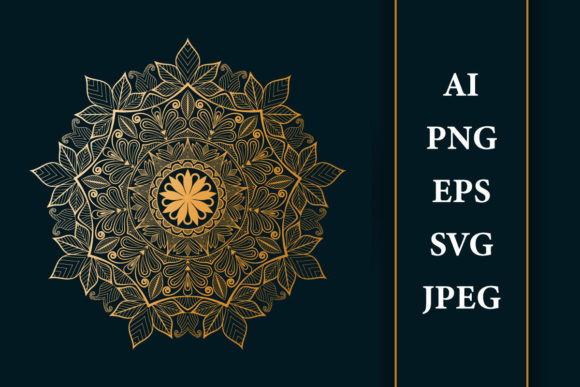
What sets the decorative colored mandala SVG apart from other vector assets is the inclusion of pre-defined color layers. Many standard mandala vectors are monochromatic, requiring the user to manually recolor every path. However, a decorative colored mandala SVG often comes with multiple color paths already applied, preserving the intended aesthetic while still allowing for further customization within compatible software. This hybrid approach bridges the gap between ready-to-use visuals and fully editable templates.
File Composition and Deliverables
When evaluating a package containing decorative colored mandala SVG assets, it is essential to understand the value proposition of the included file types. A comprehensive download typically provides a suite of formats designed to ensure compatibility across different workflows:
- SVG File: The primary vector source. This is the most flexible file type, allowing for editing in professional tools like Adobe Illustrator or free alternatives like Inkscape. It enables the manipulation of individual layers, colors, and shapes within the decorative colored mandala SVG.
- PNG File: A high-quality rasterized version with a transparent background. This is ideal for web use where transparency is required but vector editing is not necessary.
- JPEG File: A compressed raster format suitable for general sharing, email attachments, or contexts where file size is a priority over transparency.
- PDF File: A document format that preserves the layout and vector data, making it excellent for printing or viewing on devices that do not support native SVG rendering.
This multi-format delivery ensures that a decorative colored mandala SVG purchase is future-proof. Users are not locked into a single application; they can utilize the vector file for design work and the raster versions for immediate deployment.
Comparing Formats: When to Choose Vector Over Raster
Choosing between a decorative colored mandala SVG and traditional raster images depends heavily on the intended output. For users creating content for YouTube videos or Instagram feeds, the decision matrix changes based on the platform's technical constraints.
If the goal is to create motion graphics or animated overlays for video content, the decorative colored mandala SVG offers superior flexibility. Video editing software such as Adobe After Effects or even PowerPoint can import SVG files to animate individual elements independently. By separating the layers, a creator can apply rotation, scaling, or color transitions to specific parts of the mandala without affecting the rest of the design. With a standard JPEG or PNG, the entire image moves as a single block, limiting creative possibilities.
Conversely, if the final output is a simple static post for an Instagram feed where no animation is planned, a high-resolution PNG might suffice. However, relying solely on raster formats introduces risks. If a user later decides to resize the image for a different aspect ratio or print it on merchandise, the fixed pixel dimensions of a JPEG or PNG may result in a poor-quality outcome. The decorative colored mandala SVG mitigates this risk by providing the source material needed to generate new resolutions on demand.
Software Compatibility and Workflow Integration
The utility of a decorative colored mandala SVG is also defined by the software ecosystem it supports. Professional designers often rely on Adobe Photoshop and Illustrator. While Photoshop is primarily a raster editor, modern versions handle SVGs with increasing sophistication, allowing for smart object conversion. Illustrator, being a native vector tool, treats the decorative colored mandala SVG as editable geometry, offering precise control over anchor points and fills.
For users working in presentation software like Microsoft PowerPoint, the advantages are equally significant. Inserting a decorative colored mandala SVG into a slide deck allows the presenter to change colors to match corporate branding instantly or remove specific decorative elements to declutter the visual hierarchy. Attempting to achieve the same effect with a JPEG would require external editing software, adding unnecessary steps to the workflow.
Evaluating Tradeoffs and Limitations
While the benefits of decorative colored mandala SVG files are substantial, a balanced evaluation requires acknowledging potential limitations. The primary tradeoff involves browser and device support. Although SVG adoption is widespread, some older browsers or specific legacy systems may not render complex SVG files correctly. Additionally, if a user intends to use the image on a platform that strictly rejects vector uploads and only accepts raster formats, they must ensure they have the corresponding PNG or JPEG files readily available.
Another consideration is the complexity of the file itself. A highly detailed decorative colored mandala SVG with thousands of nodes can sometimes cause performance lag in less powerful computers or basic web editors. In such cases, simplifying the vector or converting it to a flattened raster image before uploading may be necessary. Furthermore, while the file includes multiple colors, the palette is predetermined. If a user needs a specific brand color that does not exist in the provided layers, they will still need to engage in manual recoloring, albeit within a more structured framework than starting from scratch.
Strategic Use Cases and Decision Factors
Determining whether a decorative colored mandala SVG is the right choice for a project involves assessing the scope of the work. These assets are best suited for scenarios requiring versatility, scalability, and frequent modification.
Ideal Scenarios:
- Social Media Content Creation: Creating a series of posts for Instagram or YouTube thumbnails where consistent branding is key. The ability to quickly swap colors or sizes ensures a cohesive look across the channel.
- Print-on-Demand Products: Designing t-shirts, mugs, or posters where the artwork must be printed at various scales. The vector nature of the decorative colored mandala SVG guarantees sharp results regardless of the product size.
- Web Design Elements: Using the mandala as a background texture or interactive element on a website. The small file size of optimized SVGs contributes to faster page load times compared to heavy raster images.
- Presentations and Reports: Adding high-quality graphical elements to business presentations without worrying about resolution issues when projecting onto large screens.
Alternative Approaches:
There are situations where a decorative colored mandala SVG might not be the optimal solution. For instance, if a project involves heavy photo manipulation where the mandala is merely a subtle texture overlaid on a photograph, a high-quality TIFF or PSD layer might offer better blending modes. Similarly, for extremely simple tasks like adding a watermark to a single image, downloading a full suite of files including PDF, PNG, and JPEG might be overkill compared to using a simple, lightweight graphic generator.
Conclusion on Selection Criteria
The decision to incorporate a decorative colored mandala SVG into a workflow ultimately rests on the balance between convenience and control. For users aged 20 to 50 who navigate diverse digital environments—from casual social media posting to professional design projects—these files represent a robust resource. They offer a middle ground between the rigidity of pre-made stock photos and the time-consuming process of designing intricate patterns from scratch.
By providing a mix of formats including PNG, JPEG, PDF, and the scalable SVG, these assets cater to the multifaceted needs of modern creators. The inclusion of multiple color layers within the vector file adds an extra layer of utility, reducing the need for extensive manual adjustments. While no single format is perfect for every situation, the decorative colored mandala SVG stands out as a highly adaptable tool for anyone seeking high-quality, customizable, and future-proof design elements.